What Made Audrey Hepburn So Classy?
audrey is a woman i deeply admire, and have for as long as i can remember. when i first saw her in roman holiday (1954), i was completely mesmerised. how can someone be so graceful? i was in awe. my obsession with her and old hollywood overall began then. i felt a lot of what films portrayed back then were missing nowadays, and audrey embodied that precisely.
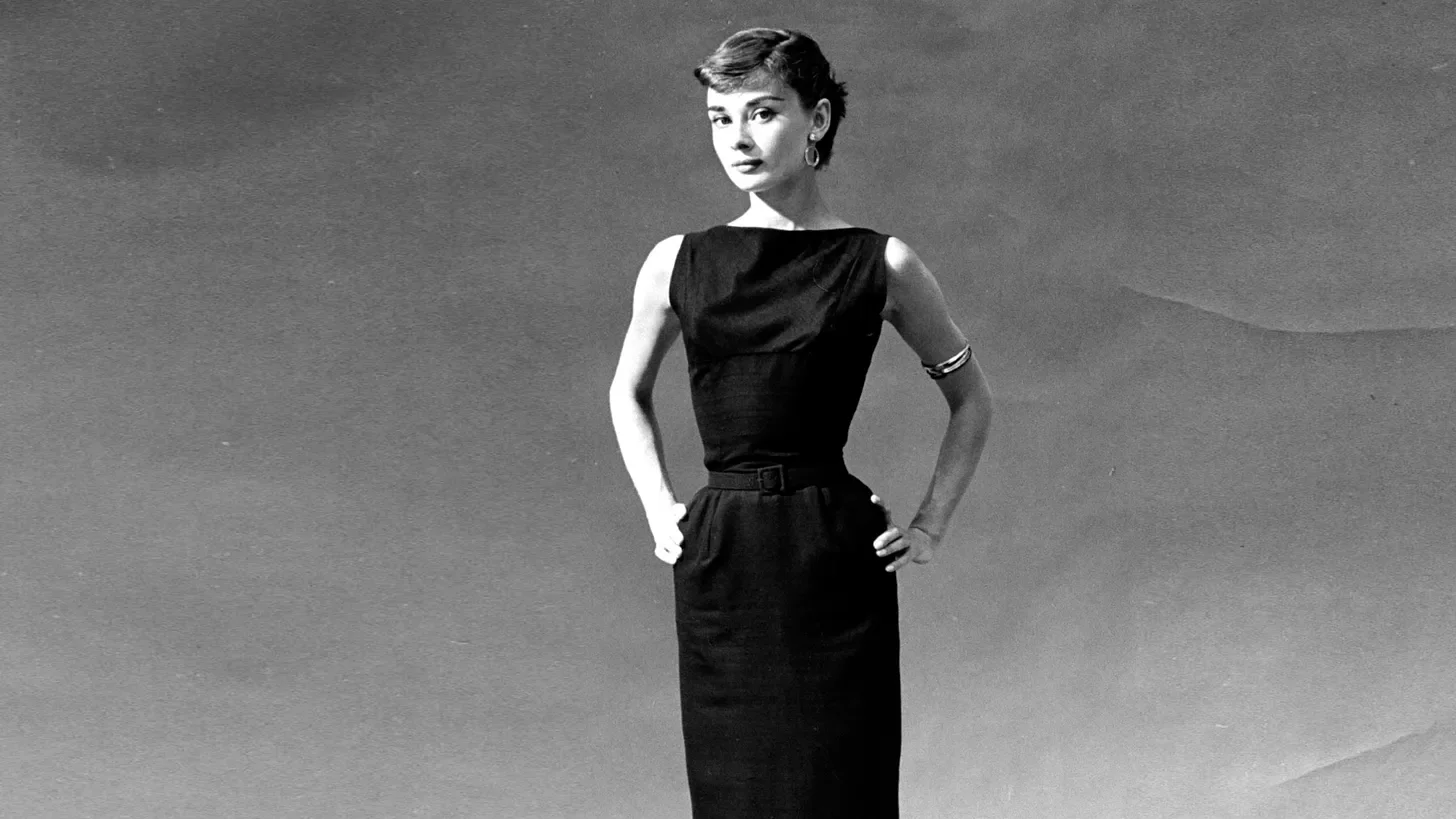
elegance is often mistaken for perfection of some kind. today i find it is curated, filtered, and often performed—it’s an aesthetic assembled very carefully for the gaze of others, of viewers. it is loud in its precision, deliberate in its efforts to appear effortless. but when one looks at a woman like audrey hepburn, this modern understanding of elegance begins to unravel.
i have been obsessed with the concept of elegance, of chic, since i was a little girl. i still read many books on the topic. it fascinates me, and i just don’t want it to become a lost art completely. as i read what would audrey do? (a book that speaks of how audrey hepburn would act in diverse specific situations), i immediately acknowledged that her elegance did not announce itself, ever. she was a very humble human being, she was always kind and gracious, too. her elegance lingered quietly, almost incidentally as though it were not something she constructed, but something she just allowed to exist within her. it was a part of her.
what made her that way was not her beauty alone, nor her fashion, nor even her talent (although all these characteristics are undeniable and certainly helped). it was, rather, a kind of discipline. it was a restraint in how she moved, how she expressed herself, and occupied space in the world. where others may have reached for excess, she chose reduction. where glamour demanded spectacle, she offered subtlety.
later, her collaboration with hubert de givenchy is often cited as the foundation of her iconic image. and it was definitely an incredibly iconic partnership, but what defined her style weren’t the garments themselves, but how little she required from them. clean lines, muted palettes, and an absence of ornamentation allowed her own presence to remain undisturbed. she understood that elegance is not achieved by addition, but by omission. it was intuitive. in a world eager to embellish, she edited.
this restraint expanded beyond clothing into movement. audrey’s background in ballet shaped the way she carried herself—lightly, deliberate, and utterly composed. she did not merely walk into a room; she arrived with a quiet awareness of her body, of space, of balance. so even in stillness, there was intention. elegance, in her case, was kinetic and completely authentic. it existed in motion, in the small, almost imperceptible gestures that revealed control without rigidity.
yet what is most striking is the way she expressed emotion. her era was an era of dramatic performance and exaggerated femininity, but audrey remained remarkably contained. her expressions were soft, never overstated, as though she trusted the viewer to meet her halfway (think of the crying scene in funny face (1957) as the wedding photos for the magazine were being shot). there is a certain courage in such restraint, the willingness to feel deeply without the need to display it all fully. she seemed to understand that emotion does not require volume to be understood.
and to speak of her elegance without acknowleding her character would be incomplete and almost ignorant. in her later years, her work with UNICEF as the goodwill embassador, revealed a different dimension of her presence.
“i would rather spend whatever energy i have left on children” she said in a 1991 interview, when asked about why she is working with the humanitarian aid organisation.
kindness, in audrey’s life was not at all performative. it was practiced quietly, consistently, without any spectacle. this, perhaps more than anything, complicates the idea of elegance purely as an aesthetic. in her case, it became ethical. grace was not only how she appeared, but how she treated others.
even her face resisted the conventions of her time. in contrast to the overt glamour of hollywood, her features were delicate, marked by an openness rather than intensity. she did not conform to the dominant ideals of beauty, yet she redefined them simply by existing within them differently. there was no attempt to overwhelm, only to be.
so what emerges, then, is a portrait of elegance not as an inherent trait, but as a way of being, of moving through life. it is a series of choices rooted in restraint, awareness, and sincerity. audrey did not pursue elegance as the end goal. she lived with a kind of quiet discipline that made elegance visible.
now, in a culture increasingly defined by excess, her presence feels almost radical. she reminds us that to be elegant is not to be seen at all costs, but to know when not be. that true refinement lies not in what is added, it lies in what is left untouched. it lies in being unique, it is already within ourselves.
so what made her elegant?
restraint — she knew when to stop. whether in fashion, expression, or presence. nothing was excessive.
simplicity — clean lines, minimal styling. she wore the clothes, the clothes did not wear her. she knew less creates more impact. (seen in her work with givenchy).
physical grace — her ballet training gave her controlled, fluid movement. elegance isn’t just in appearance, but in motion.
emotional subtlety — she expressed depth without exaggeration. she trusted quietness.
self-possession — she seemed entitely at ease with herself. she never tried dominating a space and yet never disappeared in it.
kindness — her work with UNICEF reflected a deeper grace. elegance as morality, more than something visual. in my opinion, this is the most relevant point.
non-conformity — she didn’t fit conventional beauty standards of her time, yet ended up redifining them without trying to.
